
Nueces County Previous Residents by Era
One address can leave several kinds of evidence, and none alone proves the complete household. The appraisal record provides a current parcel starting point. Recorded instruments carry a legal transfer trail. City directories and released census schedules add household clues, while maps and permits describe the building or land. Use the date and purpose of each source before linking one name to another. The coverage below is layered because the online and microfilm systems do not share a single start or end date.
| Source | Years | Where | What Shows |
|---|---|---|---|
| NCAD parcel record | 2026 preliminary/current portal | NCAD search and GIS | Current taxable parcel, owner, situs, mailing, legal, value, and identifier clues |
| GovOS Official Public Records | Live range, exact cutoff to confirm | County Clerk portal | Current index and OCR path; page notice reads Certified through 02/05/2020 Department |
| Kofile Deeds and Real Property | Deeds 1847-1972; Real Property 1973-1982 | Historic index and county access | Grantor, grantee, document placement, and period-specific book labels |
| TSLAC deed records | 1847-1886; index through 1902 | Texas A&M-Kingsville and microfilm channels | Early title and legal-description evidence |
| Corpus Christi directories | Verified listed years 1913-1993, with gaps | TSLAC and CCPL | Occupant or subscriber, address, and occupation clues |
| Federal census | Released years under the 72-year rule | NARA and library databases | Household snapshot on the census date |
| Sanborn map | Verified Corpus Christi item, 1894 | Library of Congress and library catalogs | Structures, lots, address context, and nearby buildings |
For recent history, begin with NCAD and the Clerk index. For older work, shift to Kofile and then TSLAC reels when the record trail reaches their coverage. Directories identify an occupant or subscriber at a time, not title. The census is a separate date-specific household snapshot.
Save Nueces County Parcel Records
Before looking for past residents, preserve the present parcel facts from the Nueces County Appraisal District search. Record the situs address, owner spelling, mailing address, property or geographic ID, legal description, subdivision, lot and block, tax year, and any homestead or exemption indicator. The portal labels 2026 values preliminary. Its legal-description and acreage information also needs verification, so keep a capture of the live result with the date checked.
Situs means the physical location of the parcel. A mailing address is where tax correspondence is sent, which can be a post-office box, a representative, or an address outside the county. A homestead flag can be tax evidence of an owner-occupancy claim when present, but it is not a complete household list. A missing flag also does not establish that nobody lived there.
Note: Preserve both situs and mailing fields exactly, since a change in one field can be a useful research lead but not proof of residency.
Nueces County Deed Record Layers
Modern and historic search tools have to be used together. GovOS offers a Quick Search with a search term, date range, and index or OCR choice. Search the present owner as a grantee, then separately test grantor names, date ranges, and legal-description terms. The current page's certification notice is not a complete coverage statement. Check the live returned dates and ask the County Clerk for the exact image and index cutoff when the search reaches its boundary.
Kofile carries the older sequence under different labels. Deeds cover 1847 through 1972, and Real Property covers 1973 through 1982. Plats run from 1847 through 2018 and can explain a lot, block, subdivision, split, or merge. TSLAC adds deed records from 1847 through 1886 and an index through 1902. The systems overlap in places, but they are not interchangeable.
The County Clerk's GovOS Official Public Records search is the modern index and OCR entry point.
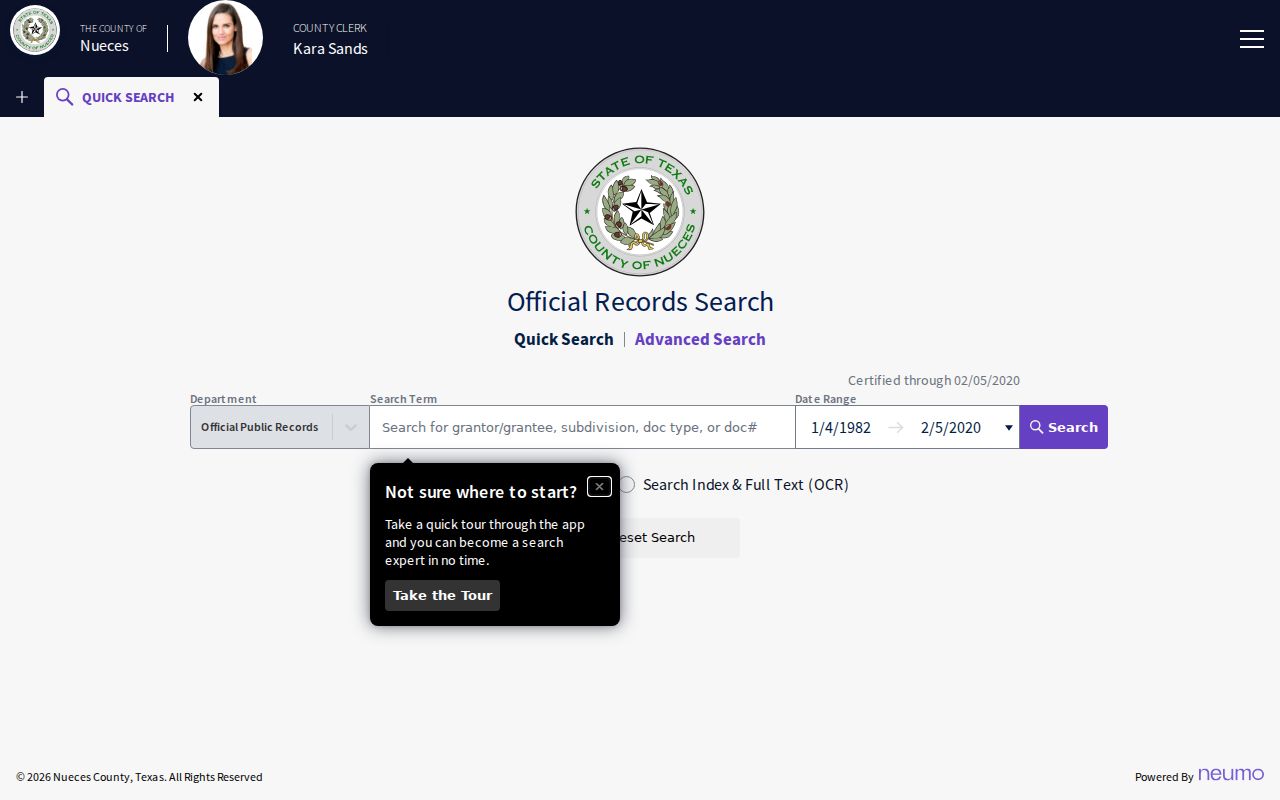
The quick-search controls show why a narrow date range and separate party-name searches help keep a backward trail organized.
Trace Past Owners in Nueces County
A chain of title is a sequence of transfers for the same property. Use the legal description as the steady identifier because a street number can be changed, a tract can be divided, or a lot can be merged. Search a current owner as grantee to locate how that owner received the property. The grantor on that instrument is the seller or transferor. Search that grantor as an earlier grantee, then repeat. Trusts, estates, corporations, and surname order can require searches under more than one party form.
- Save the NCAD owner name, legal description, subdivision, lot or block, property ID, geographic ID, and situs address.
- Search the current owner as grantee in GovOS and Kofile, keeping deed, real-property, deed-of-trust, and date filters relevant.
- Open the purchase instrument when available, or record its book, page, document number, date, and named grantor.
- Search that grantor as an earlier grantee, testing legal description and lot or block when a street string fails.
- Move to TSLAC microfilm, the clerk counter, or a written request after the online index reaches its documented boundary.
- Grantor
- The party giving or transferring an interest in the recorded instrument.
- Grantee
- The party receiving that interest. In a purchase trail, the earlier grantee may become the later grantor.
- Chain of title
- The linked sequence of recorded transfers for a parcel, checked backward from the current record.
- Legal description
- The lot, block, subdivision, tract, or other formal land description that can outlast a changed street address.
Nueces County Previous Residents and Index Gaps
Two local quirks can interrupt a simple address search. TSLAC says there is no Volume J in the 1847-1886 Nueces deed record run. That does not prove an unrecorded transfer. Check the index, nearby volumes, deeds of trust, and plats. Kofile also changes its book label from Deeds to Real Property for 1973-1982, so searching only one label can hide an expected document.
Street names need the same caution. County rural addressing is maintained through the County Addressing Program, while Corpus Christi uses separate municipal processes. A public hearing renamed Bernice Drive to Bernice Lane under Texas Transportation Code Section 251.013. No countywide verified renumbering or rename list was found. When an old address fails, compare plats, Commissioners Court material, municipal ordinances, and directory spellings instead of assuming the house was elsewhere.
The historic Kofile index is the appropriate check for the book-series labels and older party search path.
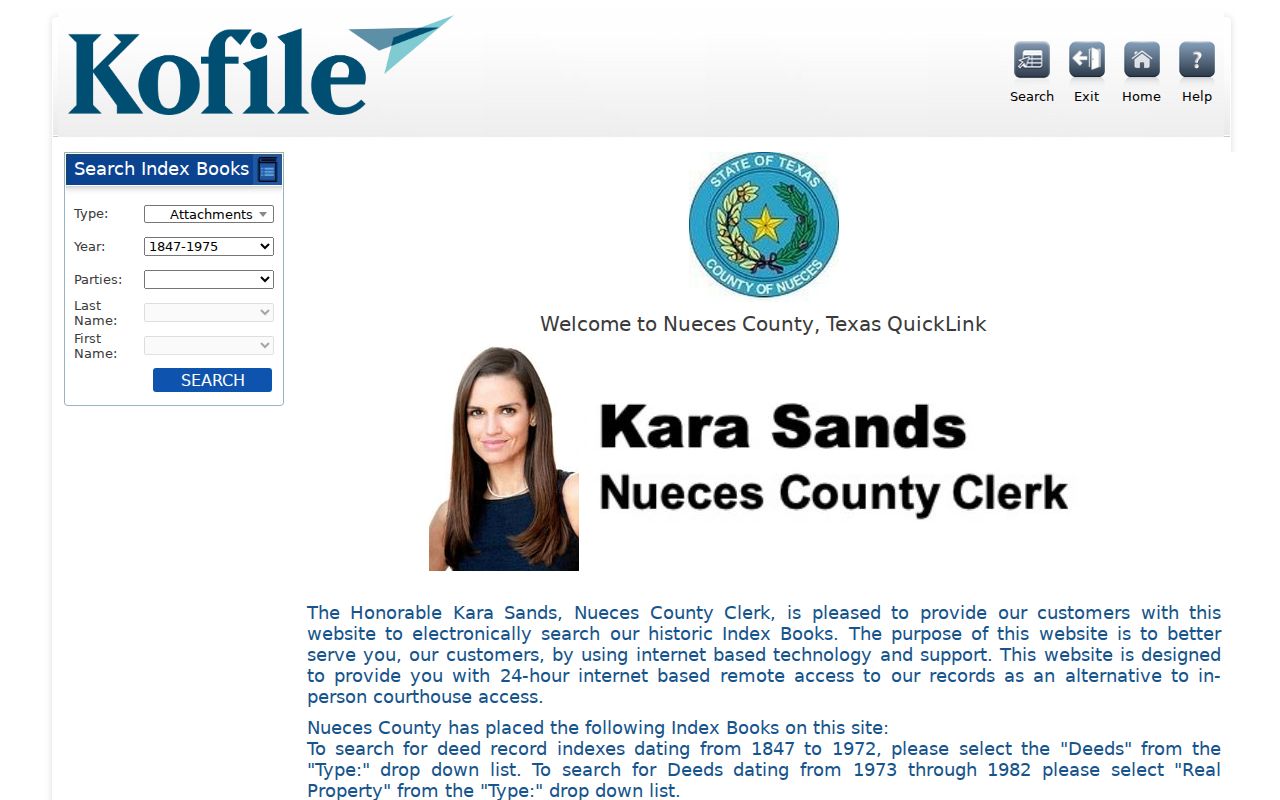
The historic index is a necessary companion to the current portal when a previous-resident trail crosses from modern records into older deed books.
La Retama Leads for Past Residents
La Retama Central Library does not advertise a named house-history guide in the reviewed material, but its Local History Department is a practical place to ask for directory, yearbook, obituary, special-collection, newspaper, FamilySearch, and reference-book leads. Staff can identify what is on shelf, in a catalog, or restricted to in-room use. Fragile records stay in the room, and black-and-white copying is 30 cents case by case. Ask about reverse or criss-cross volumes rather than assuming a complete address-to-occupant run exists.
The historical collections are treated in depth in the Nueces County Directory Book. For a house trail, use a directory as one dated occupancy clue beside the legal transfer record. A telephone listing may identify a subscriber rather than all people at the address.
Nueces County Past Household Snapshots
Ownership and occupancy are different facts. Corpus Christi directories have verified listed years from 1913-14 through 1993, with gaps and no 1970 entry in the TSLAC list. A directory can identify an occupant or subscriber with an address and occupation clue. Federal census records become available under the 72-year release rule and capture the household on the census date. Pair the closest available directory year with the census, but do not treat them as the same moment.
- Choose a verified directory year nearest the period when the address is believed to be in use.
- Record the name spelling, address, occupation or firm, and home or business distinction from the original entry.
- Locate the released census snapshot nearest that directory date and compare household names with care.
- Use a criss-cross volume only if La Retama confirms that a relevant address-ordered run is available.
- Test a disappearance with an obituary, probate file, deed transfer, yearbook, or newspaper lead.
CCPL HistorySearch is keyed to publication date and uses C, T, and CT for the Caller, Corpus Christi Times, and Caller-Times. Search broad date windows and spelling variants. An obituary can lead to relatives or a former address, while probate can identify an executor, heirs, estate property, or transfer. Neither replaces an eligible vital record.
Sanborn Evidence for Previous Residents
The verified 1894 Corpus Christi Sanborn item is a two-sheet map created and published by Sanborn Map Co. in February 1894. It can show a building footprint, street pattern, lot context, nearby structures, and fire-related construction information. It does not name residents. Pair it with a directory, plat, deed legal description, permit, or newspaper to decide whether the physical place matches the address trail.
TSLAC's Nueces County reel list identifies the archival material available before or alongside the printed directory era.
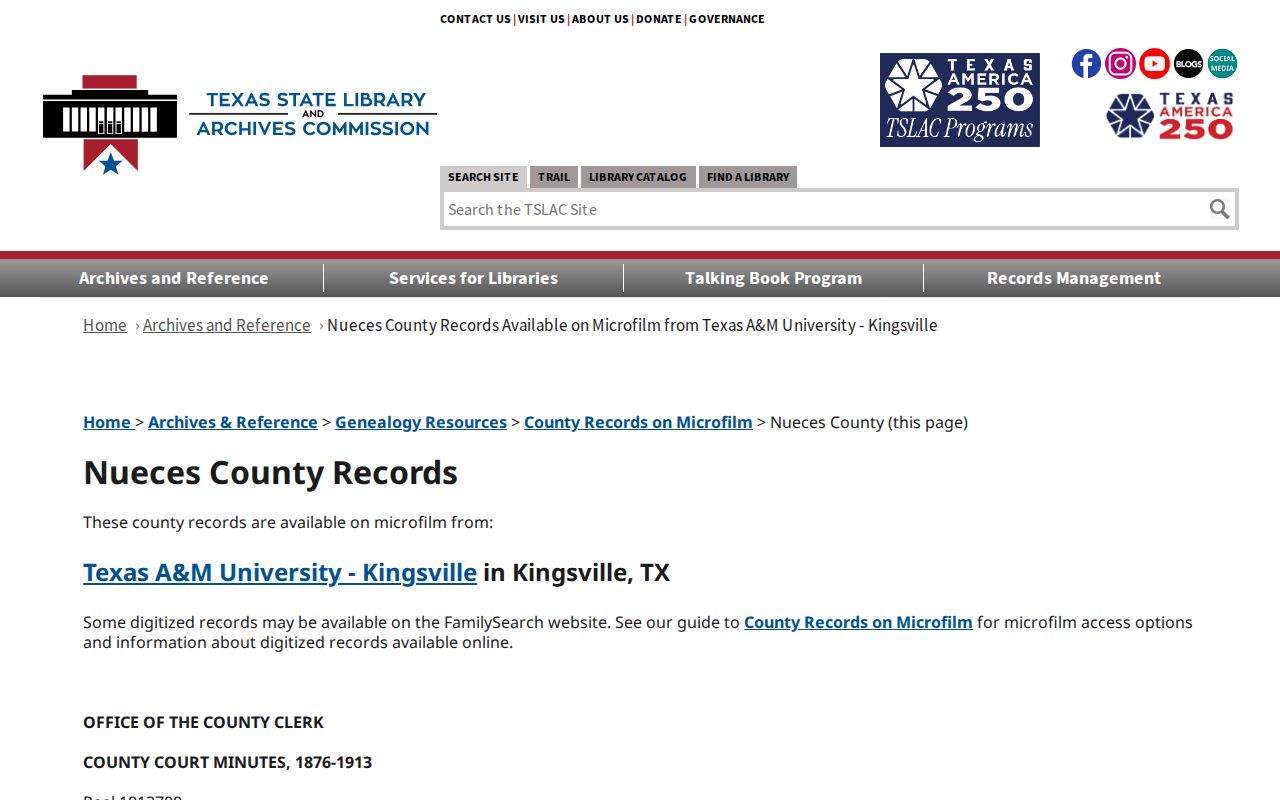
The reel inventory supports a move from a house clue into deed, probate, tax, voter, or court records when the needed period predates an online index.
Corpus Christi Directories for Past Residents
TSLAC's directory list confirms the Corpus Christi years, while the individual volumes supply the actual household clues. The collection reaches areas such as Annaville, Calallen, and Flour Bluff for 1989-93, but it remains a published listing, not a countywide statement about everyone living at an address. Request the particular year, then compare it to the parcel's legal and geographic context.
The TSLAC Corpus Christi directory holdings source provides the year-run reference used for this previous-residents step.
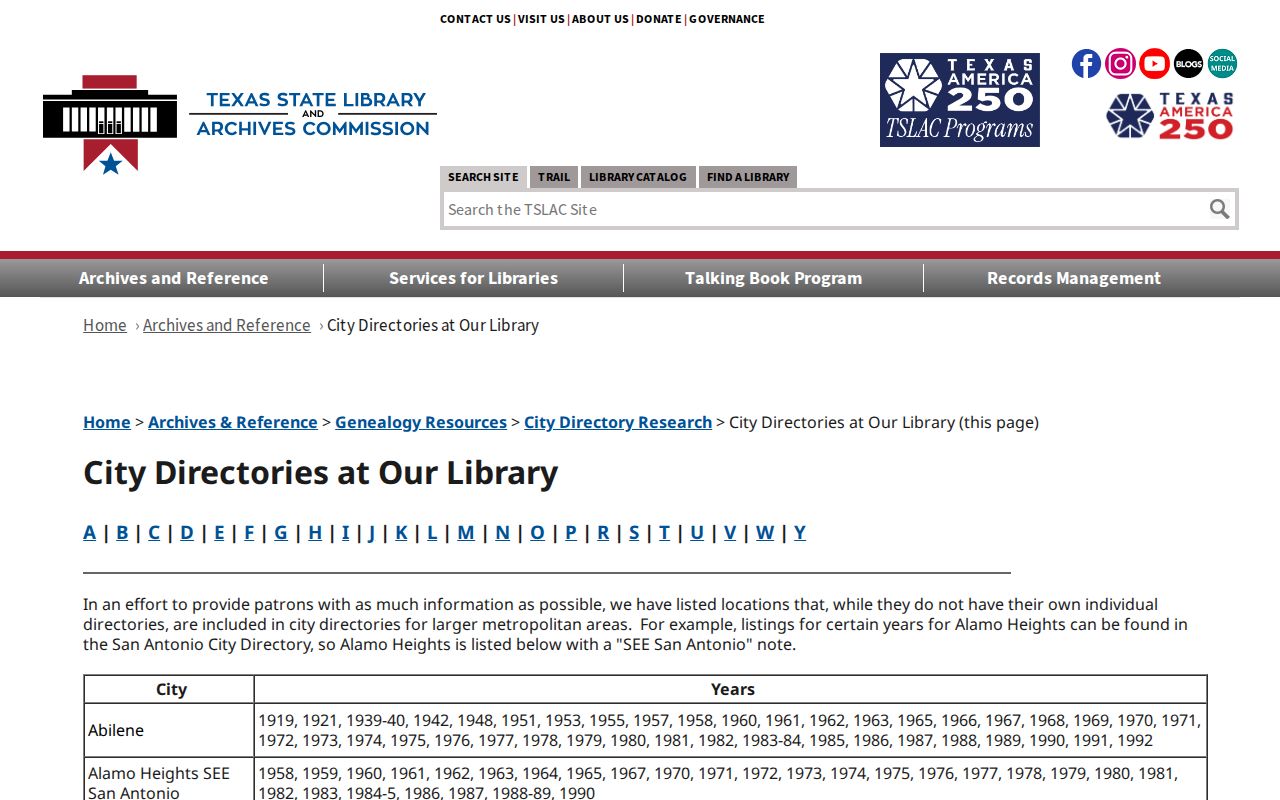
Use the displayed inventory to request a known directory year, then read the original entry with its abbreviations and date in view.
Nueces County House Records Limits
NCAD, directories, census schedules, permits, maps, obituaries, and probate records form a trail of dated claims, not a list of every past resident. An owner can have a different mailing address. A directory may list a subscriber. A census and an obituary each use their own date. City permits can add work and inspection clues, but the Corpus Christi Dynamic Portal's older-file range is not stated and no verified countywide historical permit archive was found.
Use a city request under the Texas Public Information Act when the relevant municipal record is not online, giving the address, department, and date span. For county material, the Clerk counter, mail, phone, and microfilm channels remain part of the research path. A missing online result is a reason to check the proper custodian, not a reason to invent a household history.
Note: Keep a source log with the document date, source type, name variant, street variant, and legal description so the backward chain can be checked later.