
Nueces County City Directory Holdings
Corpus Christi is the county seat and supplies the strongest verified run in the Nueces County directory record. The Texas State Library and Archives Commission, known as TSLAC, lists scattered early volumes and long mid-century runs rather than a complete annual sequence. Its holdings list is useful for choosing a year, but it does not promise a digitized image or an open shelf copy. La Retama Central Library and the library catalog are practical local checks when a TSLAC year is listed but the needed volume is not immediately available.
| Collections | Years | Where Held | Access |
|---|---|---|---|
| Corpus Christi city directories | 1913-14, 1923-24, 1929, 1937, 1939, 1941, 1944, 1946, 1948-49, 1951, 1953, 1955-69, 1971-86, 1987-88, 1989-93 | TSLAC holdings and local libraries | Holdings inventory; confirm the particular volume and access method |
| Polk evidence | 1956 report; 1960 catalog | Portal to Texas History report and library catalog | Use the original volume before quoting a complete entry |
| Yearbooks, funeral arrangements, family and business records | Exact runs not published | La Retama Local History Department | Library or in-room special-collections use |
| Digitized Texas directory collection | 1956 collection date landing page | Portal to Texas History | Collection-search lead, not verified proof of a Corpus Christi volume |
The listed Corpus Christi run has a clear 1970 gap. It also has gaps between earlier years. Treat an absence from one directory as a question to test with the next listed year, an obituary, a deed, or a census record, not proof that someone left Nueces County.
TSLAC's city-directory holdings page is the source for this view of the listed Corpus Christi run.
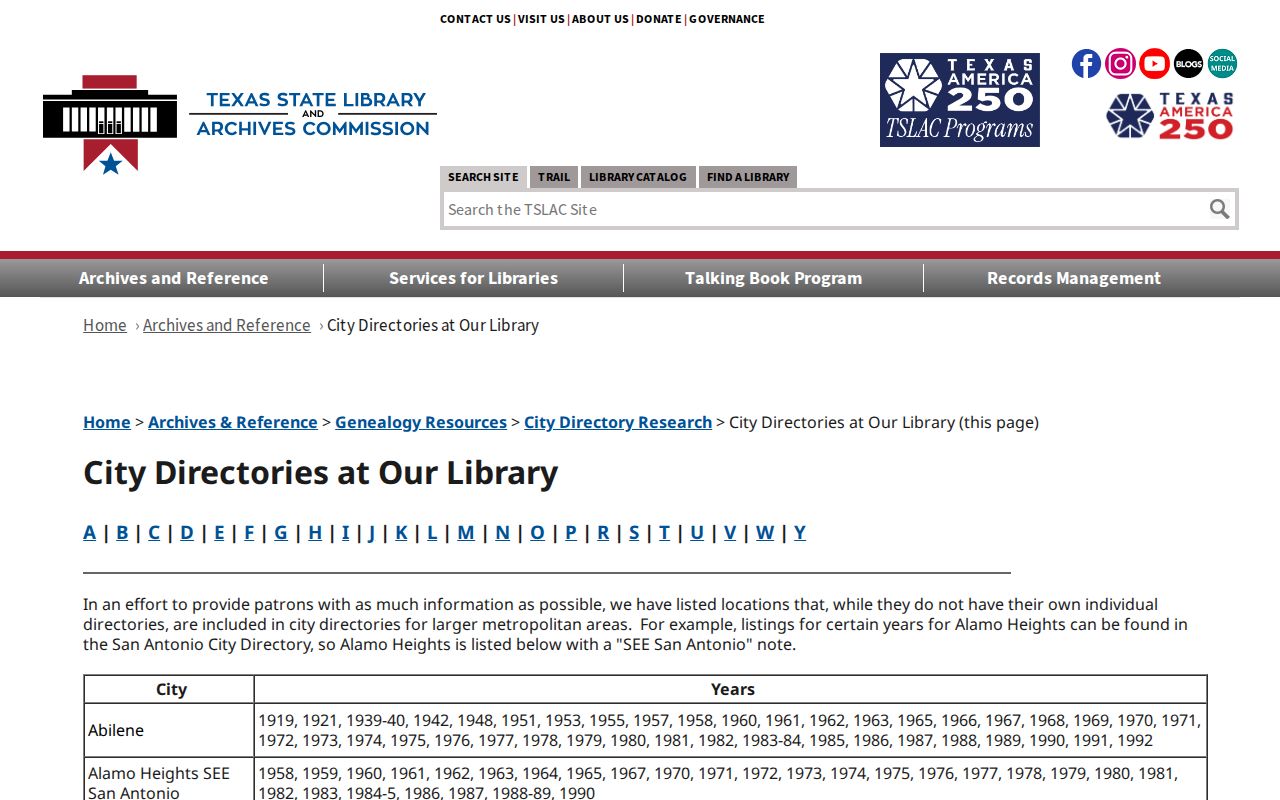
The holdings screen helps narrow a request to an available year before a library visit or archive inquiry.
Corpus Christi City Directory Years
The cluster from 1955 through 1969 and the run from 1971 through 1986 give a useful sequence for household research, but neither turns the collection into an unbroken census. The 1989-93 listings also matter beyond the city core: TSLAC directs Annaville, Calallen, and Flour Bluff research to Corpus Christi directories for those years. County geography matters here. A mailing label, neighborhood name, or later city boundary should not be used to discard a Corpus Christi listing too quickly.
- 1913-14: earliest verified listing in the TSLAC holdings record.
- 1956: a local Northside history report cites an R. L. Polk & Co. directory.
- 1960: a San Antonio Genealogical and Historical Society catalog identifies a Polk's Corpus Christi volume.
- 1970: no entry appears in the published TSLAC list.
- 1993: latest year listed in the verified Corpus Christi run, not necessarily the final volume ever printed.
Note: The holdings list identifies accessible research leads, while a volume itself establishes what was printed for a particular date.
La Retama City Directory Access
The Local History Department occupies the second floor of La Retama Central Library. Its collections include city directories, yearbooks, funeral arrangements, family records, business records, club and organization records, photographs, and scrapbooks. Local History staff can also help with FamilySearch affiliate access, computers, internet, printers, and selected research databases. Reach the department at 361-826-7030 or LocalHistory@CorpusChristiTX.gov before traveling, especially when a directory may be in special collections or temporarily off shelf.
Fragile special collections and archives are in-room only. The library asks researchers to use pencil rather than ink and keep food and drink out. Black-and-white copies are 30 cents on a case-by-case basis. Those limits make a written request for the volume year, surname, and street far more useful than a broad request for every city directory.
The Local History Department's official page shows the La Retama research setting used for Nueces County city directory work.

The room is a useful access channel when a directory, yearbook, or fragile companion source is not available as a public image online.
Polk City Directory Evidence
Publisher evidence should be kept separate from a claimed transcription. A Portal to Texas History Northside report cites R. L. Polk & Co. Publishers in 1956 and uses the directory to place Dr. Henry J. Williams at 1319 Sam Rankin Street. The same report discusses Carline Clinic at 1207 Sam Rankin in the 1940s, its absence by 1953, and Jackson & Flowers Funeral Home there in 1956. Those are strong historical leads, but the original page should be inspected before copying an exact line, abbreviation, or relationship.
The Texas digitized city-directories collection landing page provides a way to search an online collection by date. The fetched collection did not expose a verified Corpus Christi volume, so it should be used to discover leads rather than to claim online coverage.
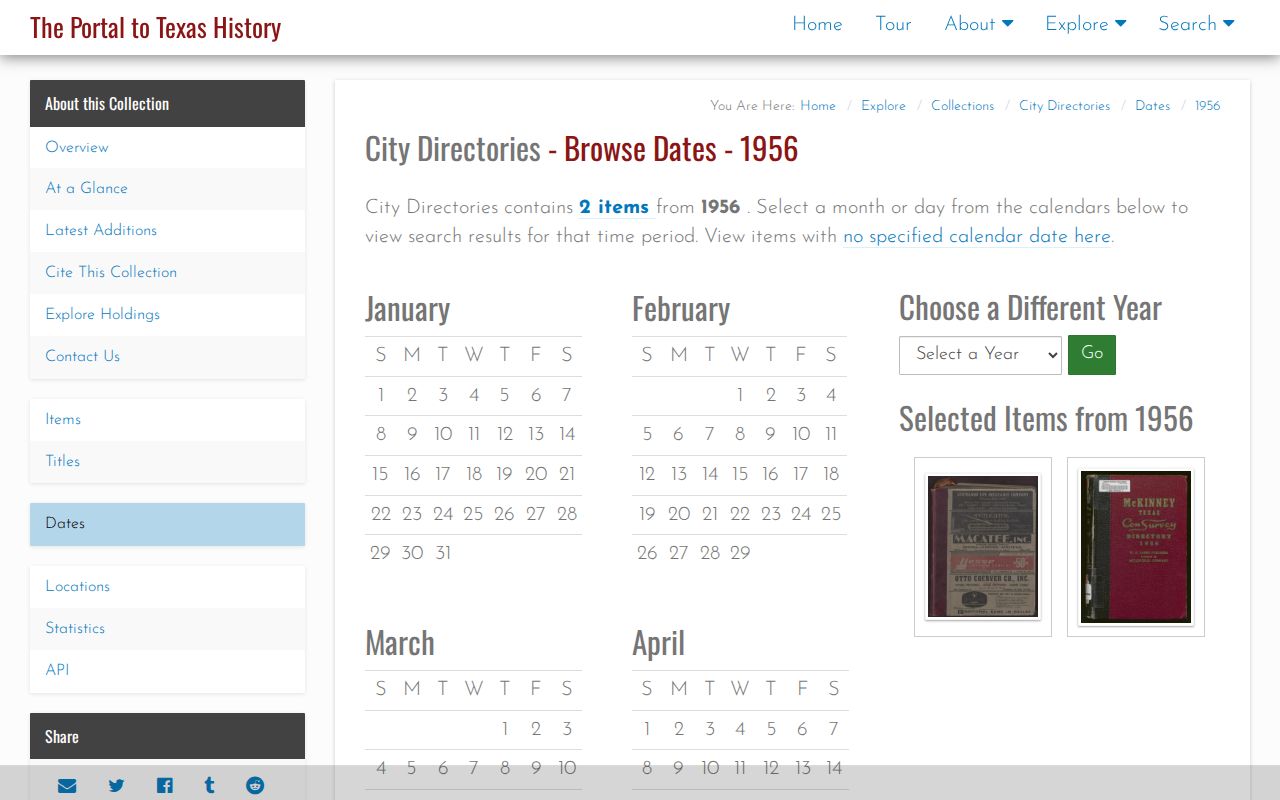
A date-filtered collection can point toward a volume, but a catalog match and the original directory remain the safer evidence for a local entry.
Reading a Nueces County City Directory Entry
A directory entry is a compact clue, not a complete biography. The reported Polk pattern can include surname and given name, a spouse in parentheses when supplied, occupation or firm, and home or business address. A full volume may use h for home, a residence marker such as r when that volume uses one, wid for widow, and shortened street or occupation terms. Do not fill missing fields from a later record. Photograph or transcribe the volume's own abbreviation key before interpreting an unfamiliar mark.
| Name | Preserve the surname, initials, and spelling exactly as printed. |
|---|---|
| Spouse notation | Parentheses or widow notation can suggest a family relationship, then need confirmation. |
| Occupation or firm | Identifies a historical work or business connection when the entry supplies it. |
| Address | Separate a stated home address from a stated business address. |
| Abbreviations | Read them from that volume's key rather than assuming one publisher's usage. |
- Criss-cross directory
- An address-ordered volume that can move research from a street number to a listed occupant. No complete local run was verified, so ask the library which volumes exist.
- Householder index
- A name-focused section that can identify the person or household under which an address is listed.
- Abbreviation key
- The publisher's explanation of shorthand, often near the front of a volume, needed to read the entry accurately.
Directory Names in Nueces County
Corpus Christi research often needs more than one name form. Hispanic family history can involve compound surnames, paternal and maternal surname order, accents omitted by an index, anglicized given names, and maiden or married variants. Start with the printed form, then try a simplified spelling, reversed surname order, initials, and a spouse's name in nearby directory years. This protects a search from treating a formatting difference as a new person.
The local obituary index adds another name check. Its HistorySearch records are keyed by newspaper publication date, not necessarily date of death, and use C for Caller, T for Corpus Christi Times, and CT for Caller-Times. Search a broad date window and compare the notice with a directory address or family name before drawing a conclusion.
Obituaries Beside City Directories
An obituary can bridge two directory years when a household appears to vanish. CCPL's index can point to relatives, a funeral home, a church connection, or a former address. It is a lead, not a vital-record substitute. A probate file may appear later than a death and may use a mailing address rather than the last physical address, so each document answers a different question.
For family-history use, pair a directory name with an obituary index result, then check whether probate, a cemetery transcription, or an eligible vital record supports the relationship and date. The library also names funeral arrangements among its collections, though exact firm and year coverage are not published. Ask staff about the collection before assuming it covers a particular surname.
Nueces County City Directory Family Trails
Trace a household by recording exactly what one volume says, then moving to the next verified directory year. The 72-year federal census release rule creates a second, differently dated snapshot. A directory may show an occupant or subscriber near a publication date; a census captures a household on its census date. Pairing them can distinguish a move from a change in listing style, but it cannot turn a nearby year into the same day.
- Find the first available directory listing under the surname, initials, spouse, and likely spelling variants.
- Copy the year, address, occupation or firm, and every abbreviation visible in the original volume.
- Check the next listed directory year and note a new address, missing name, or changed household notation.
- Match the closest released federal census year while keeping its date distinct from the directory date.
- Use an obituary, probate record, yearbook, or newspaper to test why the listing changed.
A disappearance can mean a move, death, an unlisted household member, a changed spelling, or a missing volume. The historical volumes give dated household clues; current address evidence belongs with the NCAD and clerk record trail rather than an old printed listing.
Note: Keep source dates beside each address because an occupant clue, a census household, and a later probate address may all describe different moments.
Maps Beyond Nueces County Directories
The Library of Congress holds a verified two-sheet Sanborn Map Co. Corpus Christi map from February 1894. It shows structures, addresses, and fire-related building detail, not people. For a house story, use it to test whether a building, lot shape, or street name fits an old directory address. Search the Library of Congress city collection and local catalogs for later editions instead of assuming a full year-by-year run.
The County Historical Commission's local history also places early regional development around a trading post, channel work, and the Port of Corpus Christi opening in 1926. That context can help select newspapers or a time period, but the directory, map, and deed each describe different evidence.
Earlier Nueces County Directory Context
When a family trail predates the printed directory holdings, the archives offer a different route. TSLAC identifies Nueces deed records from 1847 to 1886, a deed index from 1847 to 1902, probate indexes and minutes from 1846 to 1907, tax rolls from 1846 to 1910, and voter registration lists from 1867 to 1872. The deed record run has no Volume J. That gap is a cue to inspect the index, adjacent volumes, deeds of trust, and plats, not to assume no record exists.
The Nueces County Historical Society collections page describes preservation holdings and the Jim Stever collection, though it does not publish a searchable name catalog or posted research fee. Its organization dates to 1952, while Nueces County was organized in 1846 and the County Records Center began in 1997. Repository strengths differ: La Retama supports local directory and obituary work, while TSLAC and Texas A&M-Kingsville support older record reels. The Diocese of Corpus Christi archives also accepts written genealogy requests, but its public material does not give a complete parish-year inventory.
The Historical Society is a preservation and context resource, not a promised searchable directory of every county resident.