
Confirming Nueces County Resident Records
A resident lookup has to answer a narrow question first. NCAD can identify the owner listed with a taxable parcel and distinguish the situs address from the tax mailing address. The County Clerk index can show that a person signed a recorded instrument. The voter tool is for registration and polling information under Texas rules, while a District Clerk docket identifies a case participant rather than a current address. DSHS indexes can establish an event, and library sources can place a person at an earlier time. Use the date beside every result. A current record and a historical appearance are not interchangeable.
| Record | What It Confirms | Where to Search | Access |
|---|---|---|---|
| NCAD parcel roll | Listed owner, parcel, legal and mailing clues | NCAD Property Search | Public search |
| Voter information | Registration or polling relationship | County voter instructions | Protected fields withheld |
| Court docket | Case party, event and disposition | District Clerk case search | Index and document channels differ |
| DSHS indexes | Texas marriage, divorce, birth or death lead | Marriage and divorce indexes | Finding aid, not certificate |
| State affiliations | Entity or license relationship | SOSDirect and board searches | Product-specific access |
For an estate question, start with probate parties and recorded transfers. For a former classmate, begin with yearbooks, obituaries, and older directories. When the only fact is a name, the parcel search and court party index offer separate leads that can be compared without assuming either one identifies the same individual.
Start a Nueces County Lookup at NCAD
The Nueces County Appraisal District search is useful when an owner name or a street number is known. Its owner entry pattern is last name then first name. The advanced view adds Street Name, Property ID, Geographic ID, Owner ID, Doing Business As, tax year, subdivision, property type, and other filters. Street Name is entered without a prefix, suffix, or unit number. The portal says its 2026 values are preliminary, and the district advises users to verify legal descriptions and acreage. A match links a name to a property record, not to every person who may live there.
| Owner Name | Text, with last name first in the displayed hint. |
|---|---|
| Street Number | Text field for a numbered address search. |
| Street Name | Advanced text field, without prefix, suffix, or unit. |
| Property or Geographic ID | Identifier fields for a specific parcel record. |
| Subdivision | Optional autocomplete field for a narrower result. |
Save the displayed parcel identifiers and distinguish the physical, or situs, address from the mailing address. That distinction prevents a resident lookup from treating tax correspondence as proof of a current household.
Search Nueces County Court Parties
The District Clerk points public users to re:SearchTX, paper requests, and QuickLinks. Its Smart Search guidance permits a case number or party name, including a last-name, first-name format and case numbers with or without hyphens. Party filters can include a business name or nickname, while case filters include type, status, filing-date range, and judicial officer. An asterisk can work as a wildcard. A docket may show case number, court, style, status, filing date, party rows, charges, hearings, and financial events. That is a case trail, not a full identity file.
The official statewide court search shows the search interface used for cases and hearings.
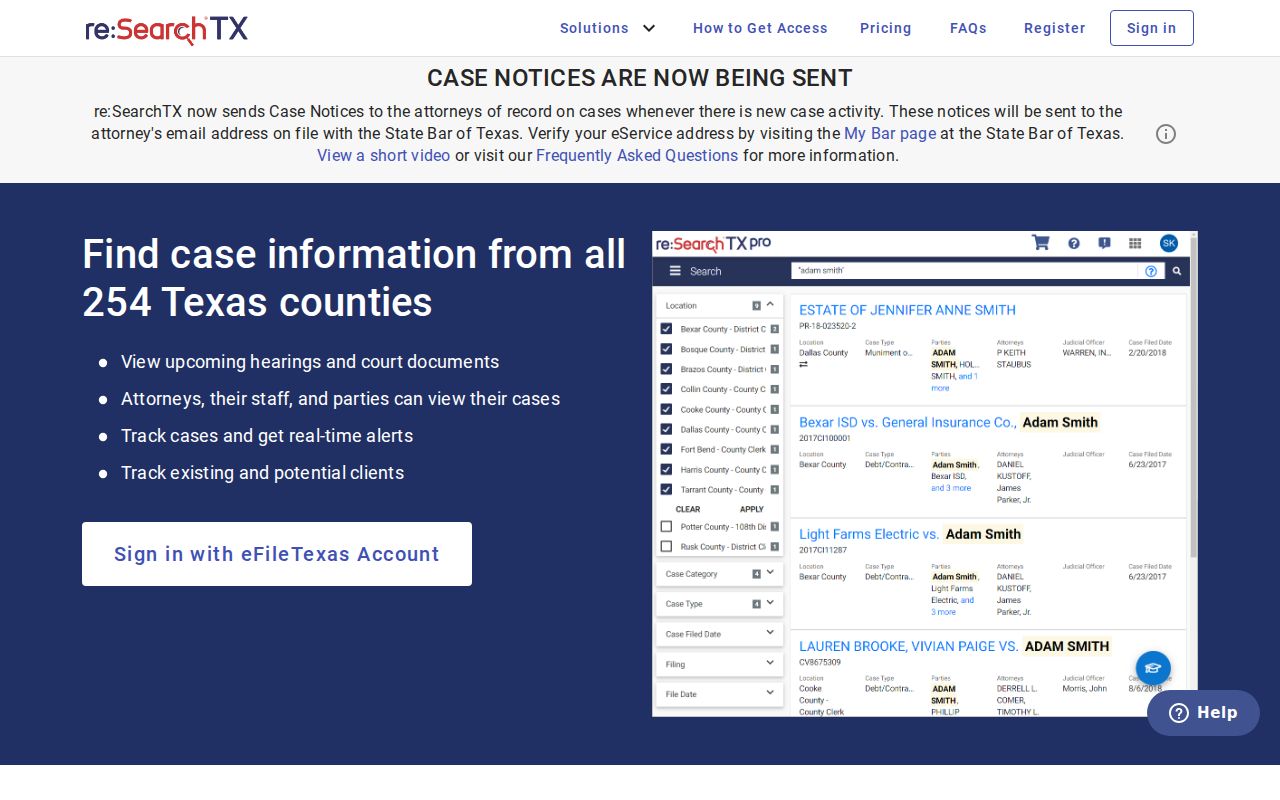
Use the result fields to compare a middle initial, date, court, or disposition before asking the clerk for a permitted document. The county says public documents may be purchased at 10 cents per page, but a certified file follows the clerk's process and may have different charges.
Verify a Nueces County Resident
A reliable resident lookup compares records made for different purposes. Gather the full name, middle initial, suffix, approximate age, former or maiden name, city, and a record date. Then decide whether the question concerns ownership, registration, a court role, an event, or a historic appearance. Do not force all names into one profile. A deed may show a party's mailing address at signing, and a court address may be older still. A record can support one link in a trail while remaining too old or too weak to establish where a person is now.
- Use NCAD to locate a matching owner record and retain the parcel and legal-description fields.
- Run the name, former name, and spelling variants through the District Clerk party search.
- Check a dated vital index or obituary lead for an event that separates same-name people.
- Ask the actual custodian for a certified copy only when an official document is needed.
- Docket
- A court's running list of case events, parties, filings, and outcomes.
- Index and image
- An index helps find a record; an image is the scanned document and may be controlled or priced separately.
- Certified copy
- A copy issued or authenticated by the custodian for uses that require the official record.
Check Texas Vital Indexes Carefully
Texas DSHS separates an index from the certificate it helps locate. Marriage index files begin in 1966 and divorce index files begin in 1968. The files can show both names, file number, ages, event date and place. Divorce entries also include the county or code, dissolution date, and a children-under-18 field. DSHS warns that indexes may have errors and are not legal copies. A certified marriage license comes from the County Clerk, while a certified divorce decree comes from the District Clerk. Birth records become public after 75 years and death records after 25 years under Texas Government Code §552.115.
The Texas vital forms page identifies the application routes for each event.
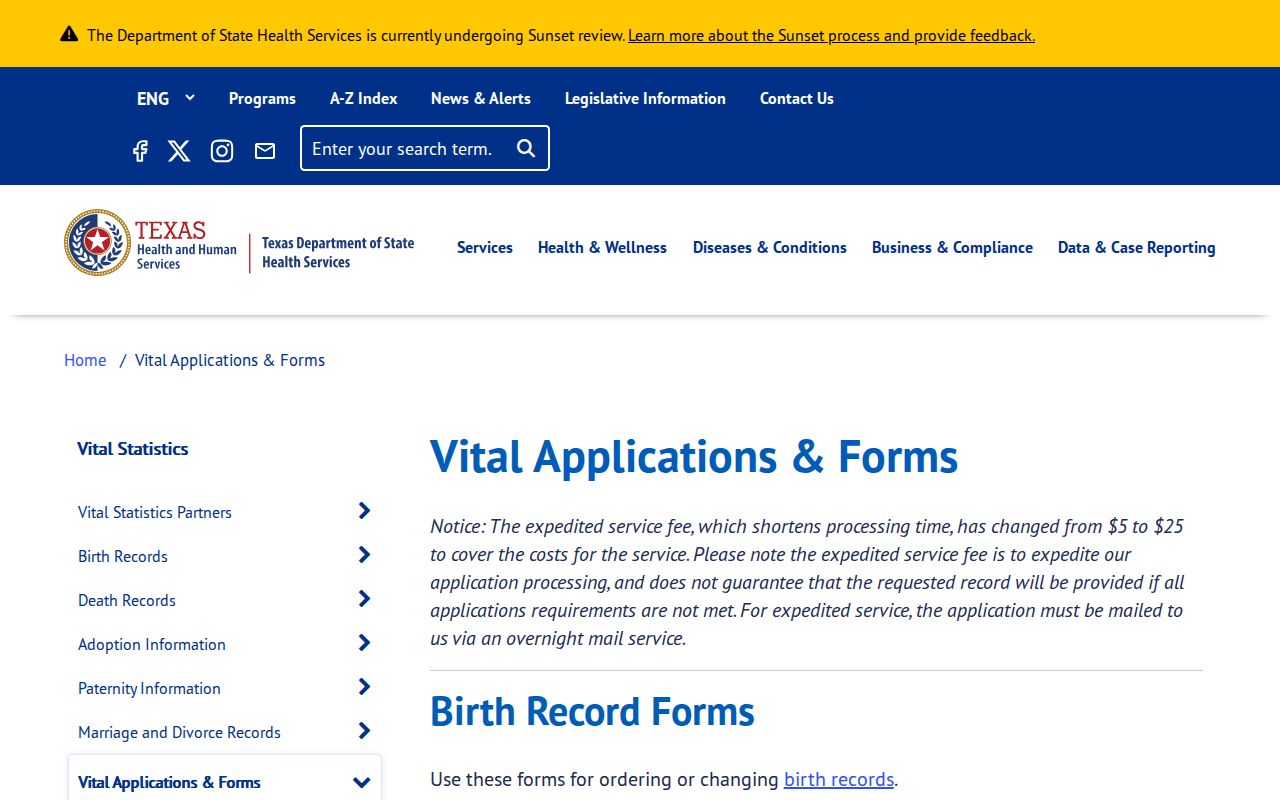
Use the form type and custodian to move from an index lead to the correct request channel. Recent copies have eligibility and identification rules.
The DSHS marriage and divorce index page describes the annual files.
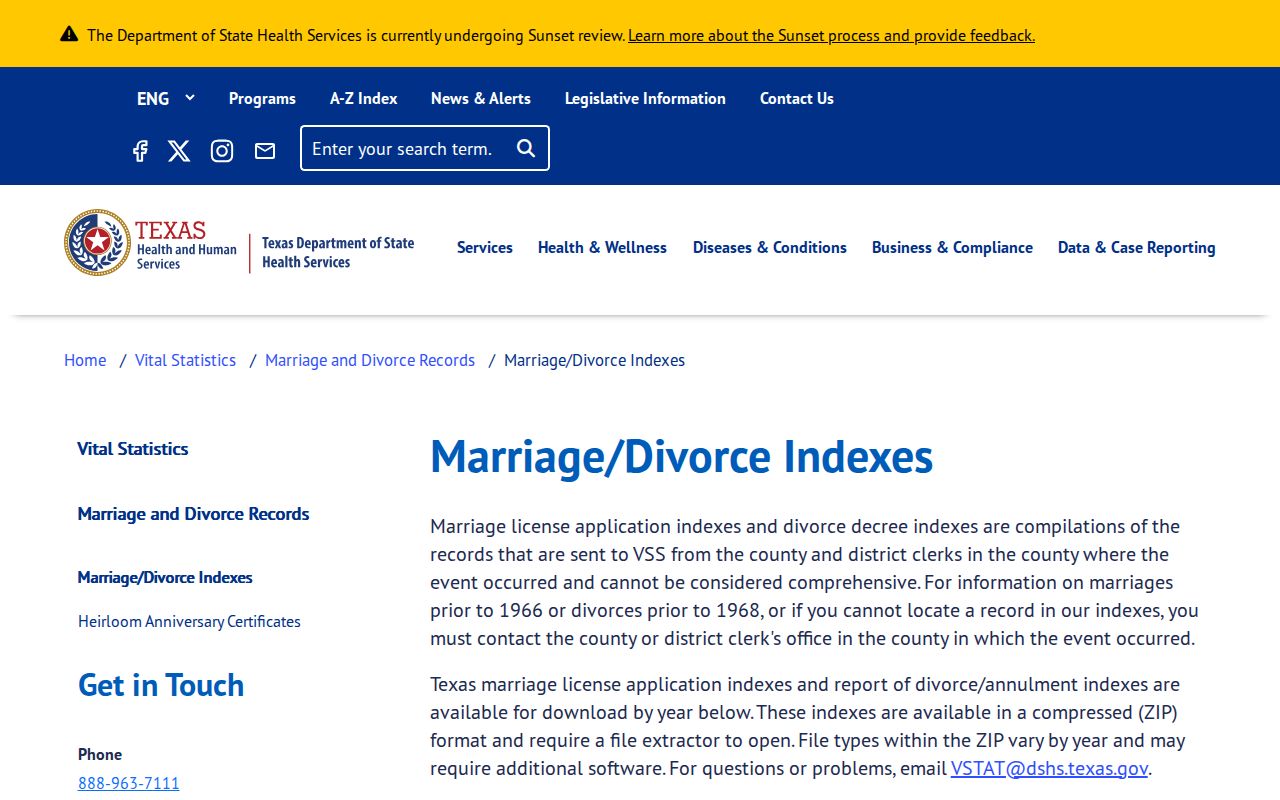
Those fields make a good cross-check for dates and names, but they should never be read as a certificate or a complete family record.
Verify Texas License and Entity Leads
Professional and entity records can help distinguish people with the same name, but they answer a limited question. SOSDirect is available around the clock, charges $1 per search with no monthly fee, and can return an entity, registered agent, officer, director, manager, filing history, and images. A registered agent is not automatically the owner. Board searches are also separate. The Health Professions tool offers name, license number, city, and county modes; board-specific tools add their own status and discipline fields. Confirm any result with the issuing agency.
The Texas accountancy lookup illustrates the license, name, city, county, and status fields available from a board tool.
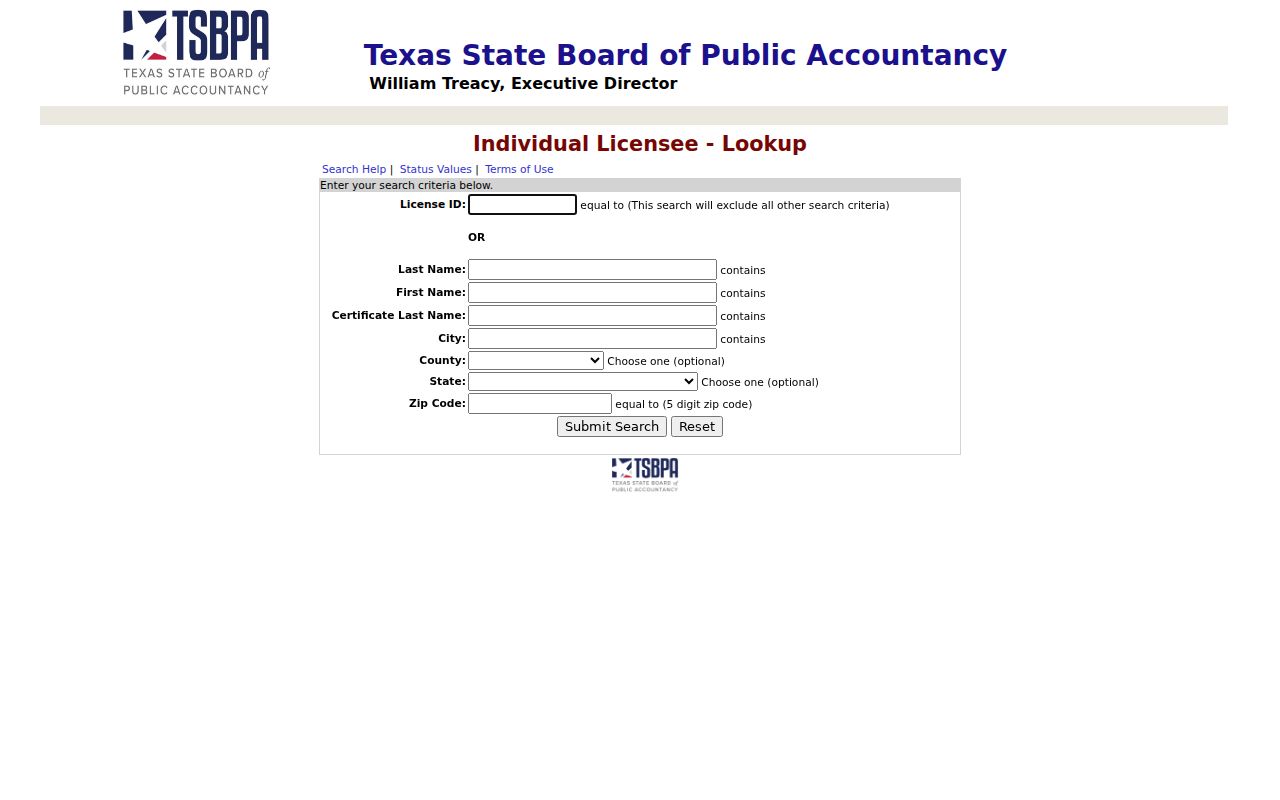
Match the name and license status with a dated official result rather than treating an affiliation as an address or household record.
The Texas license search has separate name, number, type, and status filters.
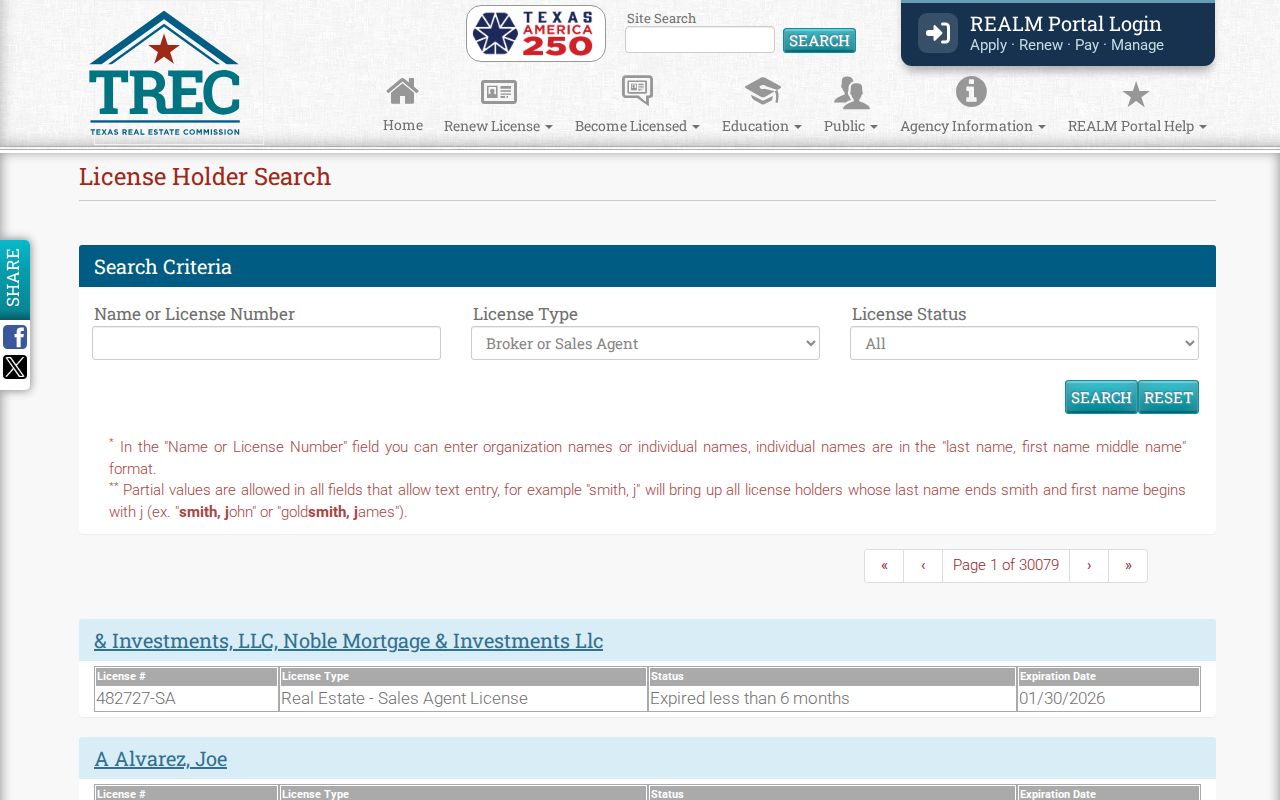
Use those filters to rule out a same-name result, then return to the record custodian for the fact that matters.
Find Earlier Nueces County Names
For a classmate, ancestor, or earlier household, the local-history trail may be stronger than a current portal. Corpus Christi Public Libraries' Local History Department holds city directories, yearbooks, obituaries, family papers, photographs, and organization records. Its obituary index is keyed to newspaper publication date, not death date, and uses C, T, and CT newspaper abbreviations. Texas State Library and Archives Commission material adds Nueces deeds, probate, tax rolls, and voter registration lists through Texas A&M-Kingsville. The useful result is a dated appearance, not an assertion about a person today.
Family-history work can join a probate party to a deed transfer or use a yearbook and obituary to narrow a former name. A library or archive may require an in-room visit, a catalog search, or a written request, so no missing online result should be treated as proof that the record does not exist.
Respect Limits in Nueces Resident Searches
Texas Public Information Act access applies to existing nonconfidential government records, not to every field that may appear in an index. Protected voter information can include Social Security, driver-license, identification, phone, and address data. The Texas Address Confidentiality Program and voter protections can replace an address with asterisks for eligible people. Juvenile, sealed, expunged, adoption, and restricted family material also remains unavailable. A blank result can reflect a restriction, a historic gap, a legal-name difference, or a record held by another custodian.
Lawful use. Use a Nueces County resident lookup for personal research, reconnecting, estate questions, or family history. Do not use records to stalk, harass, intimidate, impersonate, or expose a protected person.
When a government record is wrong, ask NCAD, the registrar, clerk, or other custodian for its correction or suppression process. Texas privacy rights against qualifying private controllers do not erase a county deed, docket, voter record, or tax parcel.
When an online index does not reach the needed date, use the Texas Public Information Act path with the actual custodian. A request should identify an existing record, describe the name, date range, and format, and avoid asking the office to create analysis. Texas guidance says nonconfidential information is presumed public unless an exception applies, but a clerk can still need time to locate an older book, microfilm reel, or archived case. For historical Nueces material, TSLAC identifies Texas A&M-Kingsville as the regional repository. That fallback is more useful than treating a modern search result as the whole record trail.